Make room before the holiday gifts arrive!
Find meaningful places to donate gently used toys, LEGO bricks,
stuffed animals, and childhood collections.
If you’re wondering where to donate used toys before Christmas, start with programs that accept the specific items you have. LEGO Replay accepts eligible LEGO bricks, Stuffed Animals for Emergencies connects plush donations with children in need, and Commons4Kids accepts several types of toys and childhood collections. Always check current guidelines before packing or dropping off donations.
November is the perfect time to tackle this project.
The holiday gifts haven’t arrived yet. You can still get into the playroom. And you have a little time to find homes for those outgrown toys before adding “deal with three bags of stuffed animals” to your December to-do list.
But choosing what to remove is only part of the process.
Then comes the sticking point:
These are perfectly good toys. Where can I take them so someone will actually USE them?
I’m a big fan of finding a donation home that makes it easier to follow through on letting go. Knowing those unused bricks could inspire another child to build something amazing? That’s a pretty good reason to get them out of the basement.
And if your toy collection lives in bins your now-adult children left behind? You’re in the right place, too.
Where to Donate Used Toys: A Quick Guide
Use this list to narrow down your options, then read the details below before preparing your donation.
| What you’re decluttering | Program to explore | Important detail |
|---|---|---|
| LEGO, DUPLO, and Technic bricks | LEGO Replay | Free shipping label; check accepted pieces |
| New or gently used stuffed animals | Stuffed Animals for Emergencies | Coordinate with a chapter or listed recipient |
| Trading cards, comics, action figures, cars, games, and puzzles | Commons4Kids | Mail-in option; sports cards have separate instructions |
| Gently used plastic toys | Second Chance Toys | Seasonal matching; check current availability |
| Unwanted crayons | The Crayon Initiative | U.S. Staples drop-off or direct shipping |
These programs have different collection methods and restrictions. The details matter—especially if you’re hoping to donate toys before Christmas.
How to Declutter Toys Before Christmas Without Creating a Bigger Mess
Don’t empty every toy bin onto the floor at once (unless you enjoy spending your evening surrounded by puzzle pieces and negotiating the future of 47 miniature dinosaurs).
Before you start, gather a few sorting containers and choose a spot to hold outgoing donations. My decluttering prep plan walks you through getting those basics in place.
Then start with ONE category, such as:
- Building toys
- Stuffed animals
- Dolls and action figures
- Toy cars
- Board games and puzzles
- Trading cards and comic books
If the toys belong to kids still living at home, involve them in choosing what they’re ready to pass along. Start with toys they’ve outgrown or no longer enjoy, and leave the sentimental favorites for later.
For an adult child’s collection, confirm what they want to keep and what they’re comfortable letting go.
You can make meaningful progress without tackling the whole collection in one afternoon.
1. Where to Donate LEGO Bricks: LEGO Replay
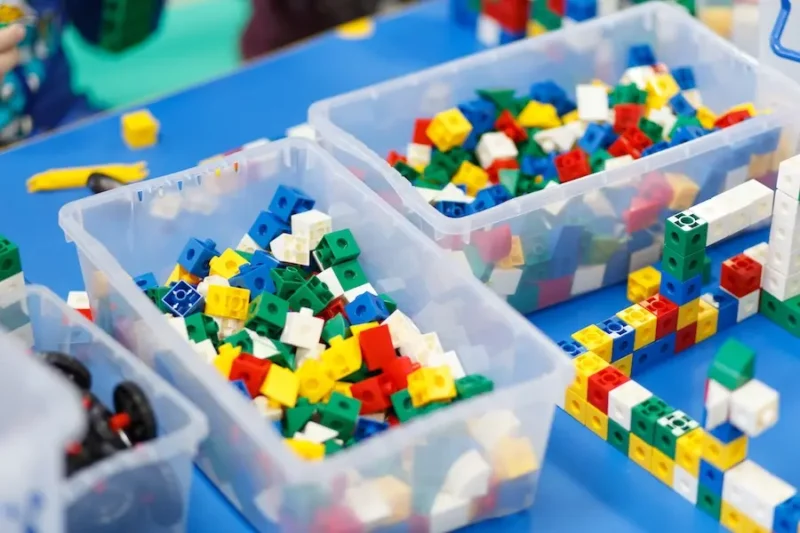
If you have a giant tub of unused LEGO bricks taking up valuable real estate in your home, put this resource at the top of your list.
LEGO Replay helps get donated bricks back into children’s hands.
The program accepts eligible LEGO System bricks, DUPLO, and Technic pieces. It also provides a free shipping label.
That gives you a concrete next step for the collection that’s been sitting untouched since your child moved on to other interests.
Review the accepted-items list, remove anything the program doesn’t take, and follow the packing instructions.
→ Donate LEGO bricks through LEGO Replay.
2. Where to Donate Stuffed Animals: Stuffed Animals for Emergencies
Stuffed animals can be a particularly tough category.
They have faces. They have names. Some have been members of the family longer than the dog.
If your kiddo is ready to part with a few, Stuffed Animals for Emergencies (SAFE) is worth exploring.
SAFE’s volunteer chapters accept new and gently used stuffed animals, clean them, and connect donations with organizations serving children facing traumatic or emotional situations. Stuffed animals donated through SAFE are given to children rather than sold.
Start with its chapter directory or urgent-needs listings. Confirm current acceptance and preparation instructions with the recipient before dropping off or shipping anything.
→ Find a stuffed animal donation option through SAFE.
3. Where to Donate Trading Cards, Comics, and Collectible Toys: Commons4Kids
Here’s a resource for those collections that seem to multiply when no one is looking.
Pokémon cards. Comic books. Action figures. Little cars.
Commons4Kids lists all of these among its accepted donation categories.
Its current list includes:
- Trading card game cards, including Pokémon, Magic, and Yu-Gi-Oh
- Comic books
- Pop! figures
- LEGO, Hot Wheels, and action figures
- Board games and puzzles
The program provides a mailing address in Kentucky. It explains that adult-oriented donations may be sold to purchase child-friendly items.
One important detail: sports cards have separate donation instructions. Check the current list before sending your collection.
This is an especially useful option if you’re sorting through childhood belongings that have been tucked away for years.
→ Review the Commons4Kids donation list.
4. Where to Donate Plastic Toys: Second Chance Toys
Second Chance Toys connects gently used plastic toys with recipient organizations.
Its guidelines call for clean plastic toys with no missing or small parts. Battery-operated toys need to work, with batteries secured inside.
This option requires advance checking.
The organization identifies April and November–December as its toy-matching seasons. However, when I checked its website for this post, it displayed a notice that donation matching was closed.
Confirm availability before making plans. If matching is unavailable, choose another destination so those toys don’t become permanent residents of your entryway.
→ Check Second Chance Toys locations and collection status.
5. A Playroom Cleanout Bonus: Donate Used Crayons
O.k., crayons aren’t technically toys. But they tend to live in the same drawers and playroom cabinets, so I’m including them.
The Crayon Initiative recycles unwanted crayons into crayons for hospitalized children.
Its current instructions say you can drop unwanted crayons at any U.S. Staples store at no cost. Direct shipping is another option.
That overflowing crayon container suddenly has somewhere useful to go.
→ See The Crayon Initiative’s donation instructions.

How to Find Places to Donate Used Toys Near You
Shipping can be convenient for a box of bricks or trading cards. A bulky play kitchen? You’ll probably want a local option.
To find places to donate used toys near you, try searches such as:
- “Used toy donations” + your city
- “Toy library donations” + your city
- “Toy donations accepted” + your county
You can also check neighborhood gifting groups or contact local preschools and family-serving nonprofits.
Ask about the specific toys you have.
“Do you currently accept clean, complete preschool puzzles?” is much easier to answer than “Do you take stuff?”
Confirm acceptance and arrange delivery before loading the car. A nearby organization may have limited storage or need different items from the ones you’re offering.
And give yourself permission to choose a practical destination. Finding the perfect recipient shouldn’t turn your toy cleanout into a month-long research project.
How to Prepare Gently Used Toys for Donation
Before donating, run through this quick checklist:
- Check for recalls. Don’t pass along recalled or unsafe toys.
- Inspect the condition. Look for broken parts, sharp edges, stains, and damage.
- Gather the pieces. Check games and puzzles for essential missing parts.
- Clean as directed. Follow both the toy’s care instructions and the recipient’s requirements.
- Test electronic toys. Follow the program’s instructions about including or removing batteries.
- Keep related items together. Bag accessories and label what belongs with each toy.
- Confirm the handoff. Check shipping instructions, collection hours, or appointment requirements.
A recipient shouldn’t have to solve a mystery to figure out which pieces go with the dollhouse.
How to Recycle Old Toys That Can’t Be Donated
Some toys have reached the end of their playtime days.
Manufacturer takeback programs may offer an option for eligible items. Keep these separate from usable donations: they collect toys for material processing rather than passing them directly to another child.
Mattel PlayBack
Mattel PlayBack accepts toys from its listed brands, including Barbie, Hot Wheels, Fisher-Price, American Girl, and MEGA.
The program provides free prepaid shipping and is available in the U.S. and Canada, among other countries. Remove batteries before shipping.
Mattel describes processing options that may include recycling or waste-to-energy. It encourages donating toys that are still in good condition.
→ Check Mattel PlayBack’s accepted toys and instructions.
Hasbro’s Free Recycling Program
Hasbro partners with TerraCycle to collect Hasbro-branded toys and games for recycling.
The program provides free shipping, although enrollment limits and waitlists may apply. Current instructions call for a full box weighing at least seven pounds, with batteries removed.
Check eligibility before starting a collection.
→ Review the Hasbro toy recycling program.
Common Questions About Donating Used Toys
Does Toys for Tots accept used toys?
Toys for Tots collects new, unwrapped toys for its holiday program. Unopened gifts your child never used may be a fit. Previously played-with toys need a different destination.
→ Find your local Toys for Tots campaign.
Can you donate toys with missing pieces?
It depends on the toy and the program. LEGO Replay accepts eligible loose bricks, while Second Chance Toys requires toys without missing parts. Check the recipient’s rules rather than assuming every incomplete collection is either useful or unusable.
How do you let go of expensive toys?
Consider the value those toys have already provided: the building, pretending, learning, and hours of play.
They don’t have to earn their purchase price back before you can let them go.
Keep a few meaningful favorites if you’d like. Photograph a special collection. Then give yourself permission to pass along the rest.
Finish Your Toy Cleanout—and Organize What’s Staying
Before you call your decluttering session done:
- Choose a recipient and confirm its current guidelines.
- Prepare and pack the accepted toys.
- Schedule the drop-off or prepare the shipment.
- Move those toys OUT of your home.
A bag marked “donate” is a good start. Getting it to its next destination is the step that frees up the space.
Once the outgoing toys are on their way, give the keepers a home that makes playtime AND cleanup easier. My 5-step process for organizing any space walks you through evaluating the space, sorting, purging, and creating a system you can maintain.
And be sure to wait until you’ve finished decluttering before shopping for storage bins. You need to know what’s staying before figuring out how to contain it!
For help keeping that space clear, explore my eight habits for a clutter-free home.
Now grab one bin and set a timer for 20 minutes.
Which toy category are you ready to tackle—and have you found a donation program other readers should know about? Share it in the comments!
More Decluttering Resources
- Where to Donate Garage Sale Leftovers
- The Declutter for Good Challenge
- No Brainer items to declutter by space
Image credits:
Image © Depositphotos.com / @ Aksakal
Image © Depositphotos.com / @ fotoqraf.tk.mail.ru
Image © Depositphotos.com / @ NewAfrica